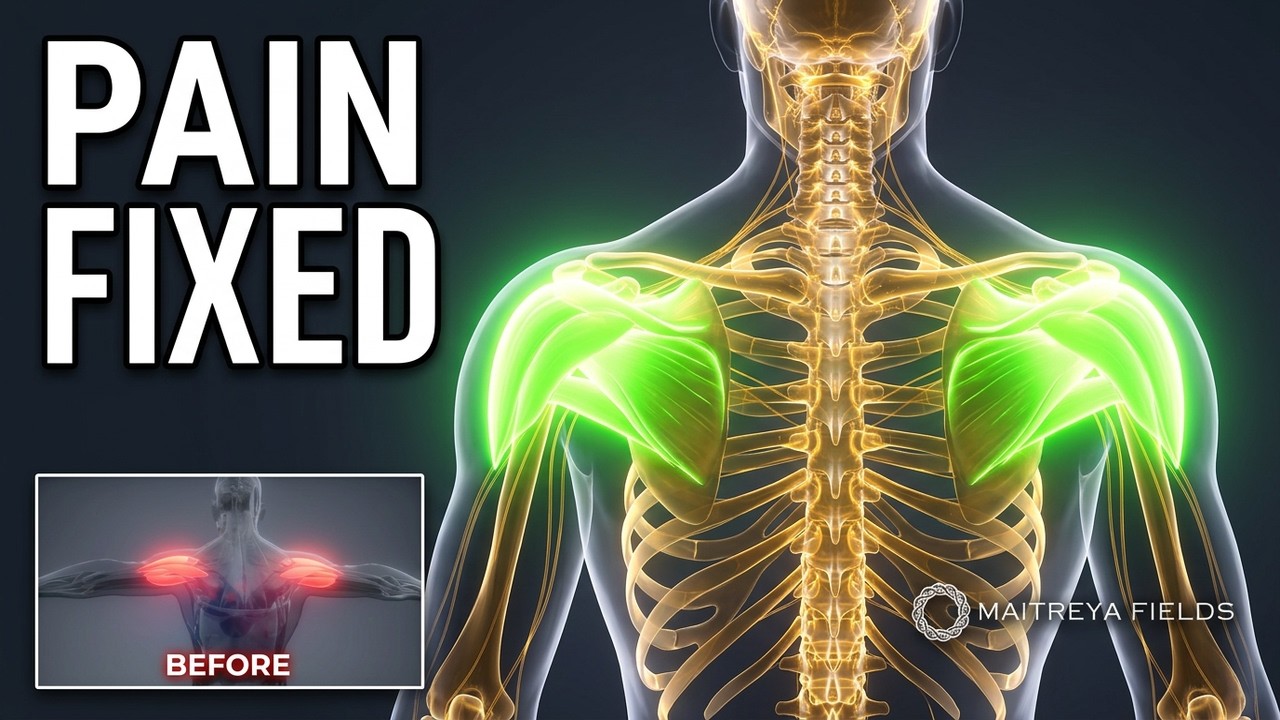
Shoulders Healing – Structural Strengthening & Pain Elimination [DM + Audio]
This field is designed to restore the shoulder complex to a state of true structural balance, strength, and stability, allowing it to handle heavy training without breakdown, inflammation, or chronic pain.
The shoulders are one of the most mobile but also one of the most unstable joints in the body. Pain does not come randomly—it is the result of imbalance, weakness in key stabilizing muscles, improper movement patterns, and accumulated stress in the joint.
This field addresses these issues at their root.
It actively strengthens and reactivates the rotator cuff muscles, restoring their ability to stabilize the shoulder joint under load. These deep muscles are responsible for keeping the humeral head properly positioned, preventing micro-instability, irritation, and long-term damage.
At the same time, the field restores proper function and activation of the scapular stabilizers, including the serratus anterior and lower trapezius. This allows the shoulder blade to move correctly, removing unnecessary strain from the joint and eliminating compensatory patterns that lead to pain.
Muscular balance is gradually re-established by reducing excessive dominance and tightness in the chest and anterior shoulder, while strengthening the posterior chain, including the rear delts and upper back. This corrects forward shoulder positioning and restores natural alignment.
In addition, the energy works through the fascial system of the upper body, releasing blockages and restrictions across the upper back, chest, and neck. By restoring proper fascial glide and reducing accumulated tension, it allows the entire shoulder complex to move more freely, eliminating hidden sources of resistance and strain that often go unnoticed but contribute directly to pain and dysfunction.
The field also improves shoulder mobility, especially in internal and external rotation, allowing the joint to move freely without friction, restriction, or impingement. This reduces inflammation and protects the tendons from overload.
As these systems come back into alignment, the shoulder becomes more efficient, more stable, and significantly more resistant to stress.
With continued use, the result is a shoulder complex that is:
- structurally stable under heavy load
- highly coordinated and balanced
- free from unnecessary tension and compensation
- capable of handling intense training without pain
This is not temporary relief.
It is the correction of the underlying mechanics that create pain in the first place—replacing them with strength, control, and long-term resilience.


